Make or buy: when in-house production beats ready made plates
Sooner or later, every garage and dealership that sells a lot of plates asks the same question. Should we make our own?
In-house production looks cheaper per plate. It also brings equipment costs, labour time, wastage and compliance responsibility. Ready made plates cost more each, but they turn up finished, with none of those overheads.
Neither answer is right for everyone. This guide shows how to work out the real cost of each option and find the volume where making your own starts to pay.
What making your own really costs
The cost of a plate you make yourself is more than the blank and the characters. List everything the job actually uses.
Fixed costs (you pay these whatever your volume)
- Equipment. A number plate printer or press, spread over its working life.
- Software and support. Licences, updates and any service contract.
- Maintenance. Servicing, spare parts and repairs.
- Space. The bench, the storage and the power the kit uses.
- Compliance time. Keeping your RNPS registration current, training staff and checking your plates meet BS AU 145e.
Variable costs (you pay these on every plate)
- Number plate components. Blanks, characters or printing media, flags and fixings.
- Consumables. Ink, film, ribbons and anything else the machine uses up.
- Labour. The minutes it takes to set up, produce, check and fit each plate.
- Wastage. Misprints, damaged blanks and plates remade after a mistake.
Labour and wastage are the two costs sites most often leave out. A plate that takes six minutes to produce, and a waste rate of one plate in twenty, both change the numbers far more than people expect.
What buying ready made really costs
Buying ready made plates is simpler to cost. You pay a price per plate, plus delivery.
The costs to watch are less obvious ones:
- Lead time. You have to wait for delivery, so same-day plates are harder to offer.
- Stock. You may hold a small float of common plates for urgent jobs.
- Admin. Placing orders and checking deliveries still takes staff time.
Buying ready made removes the equipment, the production labour and the wastage. It does not remove your RNPS duties. If you supply plates to motorists, you still need to be registered and still need to check and record their documents.
Working out your break-even point
The break-even point is the monthly volume where making your own plates costs the same as buying them. Above that volume, making your own saves money. Below it, buying is cheaper.
The sum has three parts:
- Monthly fixed cost. Add up your equipment, software, maintenance and other fixed costs for one month.
- Saving per plate. Take the price of a ready made plate and subtract your full variable cost to make one.
- Break-even volume. Divide the monthly fixed cost by the saving per plate.
A worked example
The figures below are examples to show the method. Replace them with your own quotes and costs.
| Item | Example figure |
|---|---|
| Equipment, spread over 36 months | £110 a month |
| Software, support and maintenance | £40 a month |
| Monthly fixed cost | £150 |
| Components and consumables per plate | £2.50 |
| Labour per plate (5 minutes at £15 an hour) | £1.25 |
| Wastage allowance (5%) | £0.19 |
| Variable cost to make one plate | £3.94 |
| Ready made price per plate, delivered | £6.00 |
| Saving per plate made in-house | £2.06 |
| Break-even volume | £150 ÷ £2.06 = about 73 plates a month |
In this example, a site selling fewer than about 73 plates a month would save money by buying ready made. A site selling 200 a month would save around £260 a month by making its own.
Small changes move the answer a long way. If labour takes eight minutes instead of five, the break-even point rises to around 118 plates. Your own figures matter more than anyone else's rule of thumb.
When making your own wins
- High, steady volume. Dealer groups and busy sites that clear the break-even point every month.
- Same-day demand. Customers who want plates fitted while they wait, or cars that need plates before they leave the showroom.
- Staff with spare capacity. A team that can produce plates between other jobs, rather than being pulled off paid work.
- One central site. A single production point that can serve several branches.
When buying ready made wins
- Low or uneven volume. Sites that sell a handful of plates a week, or only get busy at the plate change.
- Several small branches. Putting equipment and trained staff in every branch rarely pays.
- Specialist plates. Shaped, oversize, motorcycle and import plates are slow sellers and easy to get wrong.
- Tight on space or skills. No room for the kit, or no one trained to use it.
- Plate change peaks. Extra ready made plates can cover March and September without buying equipment you only need twice a year.
The hybrid option
Many sites do both. They make standard oblong plates in-house, where volume is high and the job is simple. They buy shaped, oversize and specialist plates ready made.
That keeps the in-house operation lean and avoids tying up cash in slow-moving blanks. It also gives you a backup if your equipment breaks down during the plate change.
Questions to answer before you decide
- How many plates did we sell in each of the last 12 months?
- How many of those needed plates the same day?
- Who would produce them, and what would they stop doing?
- What would the equipment cost to buy, run and service?
- Where would the kit and stock go?
- Are we ready to take responsibility for plate compliance under BS AU 145e?
- Are our RNPS records up to the job?
Make or buy with Sandhurst Autoprint
Sandhurst Autoprint is a registration plate supplier to the motor trade. We supply both options. We supply BS AU 145e compliant number plate components for sites that make their own, and ready made plates for sites that buy in.
Whichever you choose, we can help you work through the numbers. Talk to your account manager, or order through the Sandhurst Autoprint Trade Portal. The portal holds your negotiated pricing, orders by branch and keeps your artwork on file.
Frequently asked questions
Is it cheaper to make your own number plates?
It can be, once you sell enough plates each month. Below that volume, the cost of equipment, labour and wastage makes ready made plates cheaper.
How do I work out my break-even volume?
Divide your monthly fixed costs by the saving you make on each plate. The saving is the price of a ready made plate minus your own cost to make one.
Do I need to be registered to make number plates?
Anyone who supplies number plates to motorists in England and Wales must be registered with the DVLA's Register of Number Plate Suppliers, whether they make the plates or buy them in.
What equipment do I need to make number plates?
Most sites use a dedicated number plate printer or a press, with software for the standard font and layout. You also need blanks, characters or printing media, flags and fixings.
Can I make some plates and buy others?
Yes. Many sites make standard plates in-house and buy shaped, oversize or specialist plates ready made.
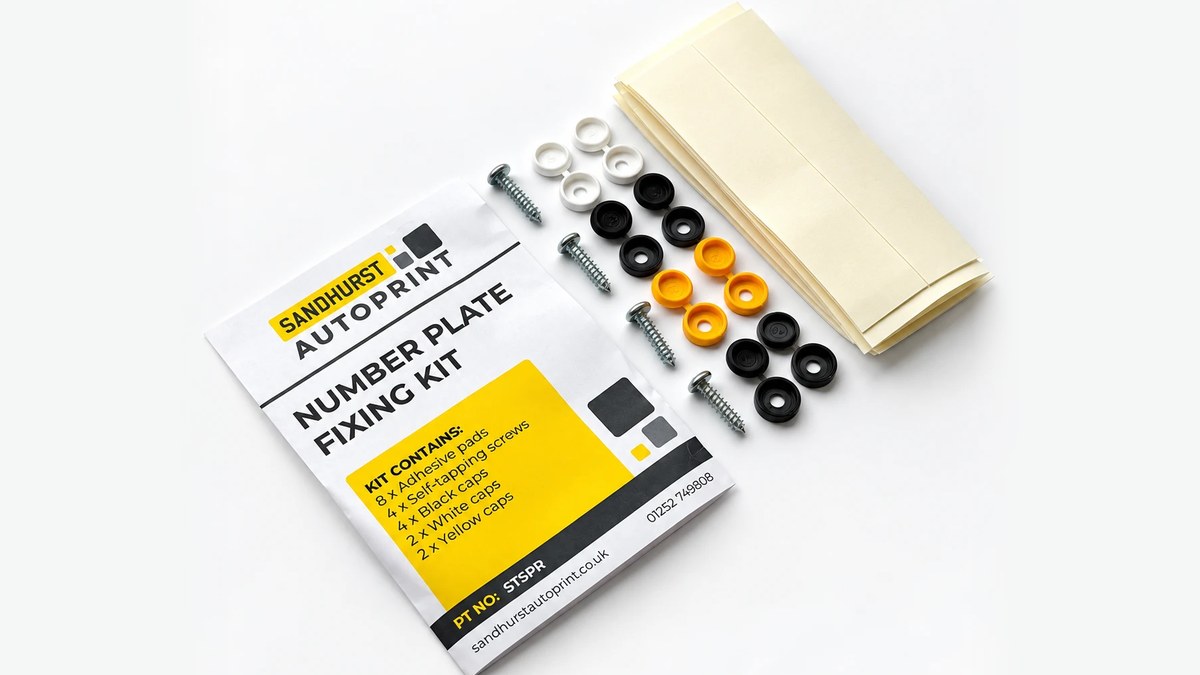
Number plate fixings: screws, sticky pads or both
Screws are still permitted, but we recommend sticky pads. What the regulations and the MOT say about fixing a number plate, which fixing suits which job, and how to fit plates that stay put.
Read article →
Getting February and August right: a pre-order planning guide
New registration periods reward the sites that plan stock in advance. How to forecast volume, when to place a pre-order, and what to hold versus what to order in.
Read article →