
RNPS record keeping: what the DVLA expects you to hold, and for how long
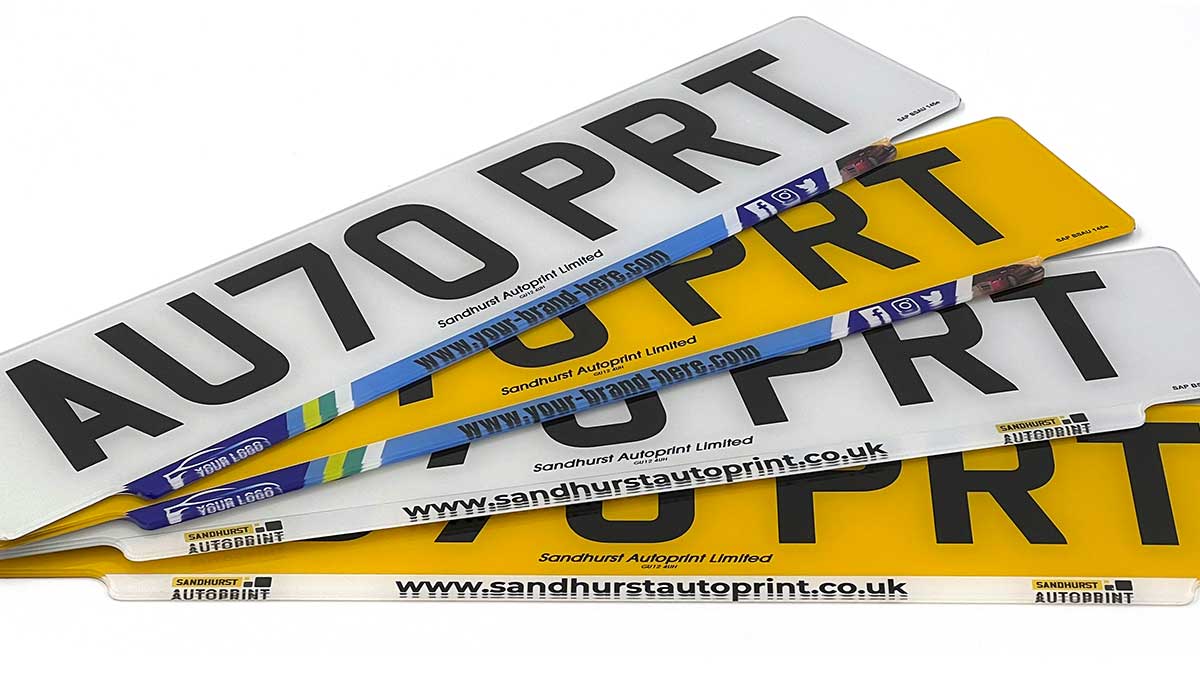
Every registered number plate supplier in England and Wales has to keep a record of each plate it sells. Most suppliers know that. Far fewer could hand over a complete, correct log if a police officer or Trading Standards walked in today.
This guide sets out what the Register of Number Plate Suppliers (RNPS) requires you to record, which documents count, how long to keep the records and what happens when they are missing. It is written for the person on the counter who actually keeps the log.
Why the RNPS exists
The DVLA set up the Register of Number Plate Suppliers under the Vehicles (Crime) Act 2001. Its purpose is to stop criminals getting plates for a registration that is not theirs. Cloned plates are used to dodge speeding fines, congestion charges and parking penalties, and to hide stolen vehicles.
The register works because every legitimate plate can be traced. The supplier mark on the plate shows where it was made. Your records show who it was made for, and what they proved before you made it.
Anyone who sells number plates to the public must be registered, and so must anyone who makes plates for sale to other businesses. That includes garages, dealers and accessory shops that make plates alongside their main business.
What you must check before you make a plate
Before you make or supply a plate, the customer has to prove two things. They have to prove who they are, and they have to prove they are entitled to the registration number.
You should see the original documents. A photocopy or a photo on a phone is not the same as the document itself.
Proof of identity
The customer must show at least one of these:
- a driving licence (UK or foreign)
- a gas, electricity, water or landline phone bill from the last six months
- a council tax or rates bill from the last six months
- a bank or building society statement from the last six months
- a passport (UK or foreign)
- a national identity card
- a debit or credit card from a bank or building society
- a police warrant card
- an armed forces identity card
Some of these show a name only, such as a passport or a bank card. Others show a name and address, such as a driving licence or a utility bill. Your record needs the customer's address, so a name-only document may not be enough on its own.
Proof of entitlement
The customer must also show at least one of these:
- a V5C registration certificate (logbook)
- the V5C/2 new keeper slip (green slip)
- a V750 certificate of entitlement
- a V778 retention document
- a V11 vehicle tax reminder or SORN notice
- a V379 temporary registration certificate
- a V948 or eV948 number plate authorisation certificate, which is only valid for a short time
- a letter of authorisation from a fleet, lease or hire company, quoting the V5C reference
- the insurer's reference and policy numbers, for plates replaced after an insurance repair
- a trailer registration certificate
A V5C is the most common entitlement document. It does not prove identity. A customer who hands over only a logbook has proved half of what you need.
What your record must contain
For every plate you supply, record:
- the registration number on the plate
- the customer's full name and address
- the document you saw to confirm their entitlement
- a traceable reference number from the documents, such as a driving licence number, the V5C document reference or an insurance policy number
The reference number is what makes the record useful. It lets an investigator link a plate to a specific document and, through that document, to a real person.
The DVLA publishes a standard RNPS record sheet you can use. Many suppliers keep a paper log. Others record the same fields in their point of sale or job management system. Either works, as long as each sale is complete and you can produce the records quickly.
How long to keep records
Keep every record for three years. You must produce them on request to:
- the police
- the DVLA
- the DVSA
- Trading Standards
Authorised officers can enter your premises at any reasonable time, without notice, to inspect your plates and your records. They can also take copies.
Three years is a long time for a paper log in a busy workshop. Store completed sheets somewhere dry and secure, file them by date, and know where last year's box is.
Records contain personal data
An RNPS log holds names, addresses and document numbers, so it is personal data under UK GDPR. The law requires you to keep the records, so you have a lawful reason to hold them. You still need to look after them properly.
- Record only what the regulations require.
- Keep paper logs locked away, not on the counter.
- Limit access to a digital log to the staff who need it.
- Destroy records securely once the three years are up.
Selling plates to other businesses
The rules change when you supply plates to another business that will sell them on. In that case you must check that the business is itself a registered number plate supplier and record its RNPS registration number.
The identity and entitlement checks sit with the supplier that sells the plate to the motorist. If you buy ready made plates from a trade supplier, those checks are still your job.
Where suppliers get it wrong
These are the gaps that turn up most often:
- Only one document checked. A V5C on its own proves entitlement but not identity.
- No reference number. A name and address without a document reference cannot be traced back.
- Trade and repeat customers waved through. A familiar face still needs to show documents for each new plate.
- Out of date bills and statements. Utility bills, council tax bills and bank statements must be from the last six months.
- Records that cannot be found. A log you cannot produce during an inspection gives you the same problem as having no log at all.
- Details not updated. You must tell the DVLA within 28 days if you change your business name or address, or stop trading.
The penalties
Failing to keep proper records can lead to a fine of up to £1,000. Supplying plates that do not meet the British Standard carries a fine of up to £2,500.
The bigger risk is suspension. A magistrates' court can suspend a supplier from the register for up to five years. For a garage or accessory shop, that means losing a steady source of income and the footfall that comes with it. For a specialist plate maker, it means losing the business.
Keep the paperwork simple
Good record keeping comes down to doing the same thing on every sale. Use one log format across every branch. Keep a list of accepted documents at the counter. Refuse the sale if the paperwork is not there.
Your plates also need to meet the standard. Our guide to BS AU 145e covers what every plate must show, including the supplier mark that links each plate back to your records.
Supplying the trade
Sandhurst Autoprint is a registration plate supplier to the motor trade. We supply BS AU 145e compliant number plate components and ready made plates to registered suppliers, dealer groups, garages and fleet operators.
Trade customers can order through the Sandhurst Autoprint Trade Portal. The portal holds your negotiated pricing, orders by branch and keeps your artwork on file.
RNPS record keeping checklist
- Customer's proof of identity seen, with an address
- Customer's proof of entitlement seen
- Original documents, not photocopies
- Bills and statements dated within the last six months
- Registration number recorded
- Customer's full name and address recorded
- Document reference number recorded
- Records stored securely and kept for three years
- Business customers' RNPS numbers recorded
- DVLA told about any change of name or address within 28 days
Frequently asked questions
How long must a number plate supplier keep records?
Three years. Records must be produced on request to the police, DVLA, DVSA or Trading Standards.
What documents does a customer need to buy number plates?
One document proving their name and address, such as a driving licence or a recent utility bill, and one document proving they are entitled to the registration, such as a V5C.
Is a V5C proof of identity?
No. A V5C proves entitlement to the registration number. The customer also needs a separate proof of identity.
Do I need to check ID when selling plates to another business?
When you supply plates to another business for resale, check that the business is a registered number plate supplier and record its registration number. The supplier that sells to the motorist carries out the identity and entitlement checks.
What is the penalty for not keeping RNPS records?
A fine of up to £1,000. A supplier can also be suspended from the register, which stops it trading in number plates.
Can the police inspect my records without notice?
Yes. Authorised officers from the police, DVLA, DVSA and Trading Standards can enter your premises at any reasonable time to inspect plates and records.
Cloned number plates: the DVLA's new online reporting service
The DVLA and police in England and Wales have launched a single online form for reporting cloned number plates. What it does, what it does not do, and what the crackdown means for plate suppliers.
Read article →
Ghost number plates: what the crackdown means for plate suppliers
A national crackdown on ghost number plates has put plate suppliers in the spotlight. What the law already says, what is still under review, and how to protect your counter and your records.
Read article →