Ghost number plates: what the crackdown means for plate suppliers
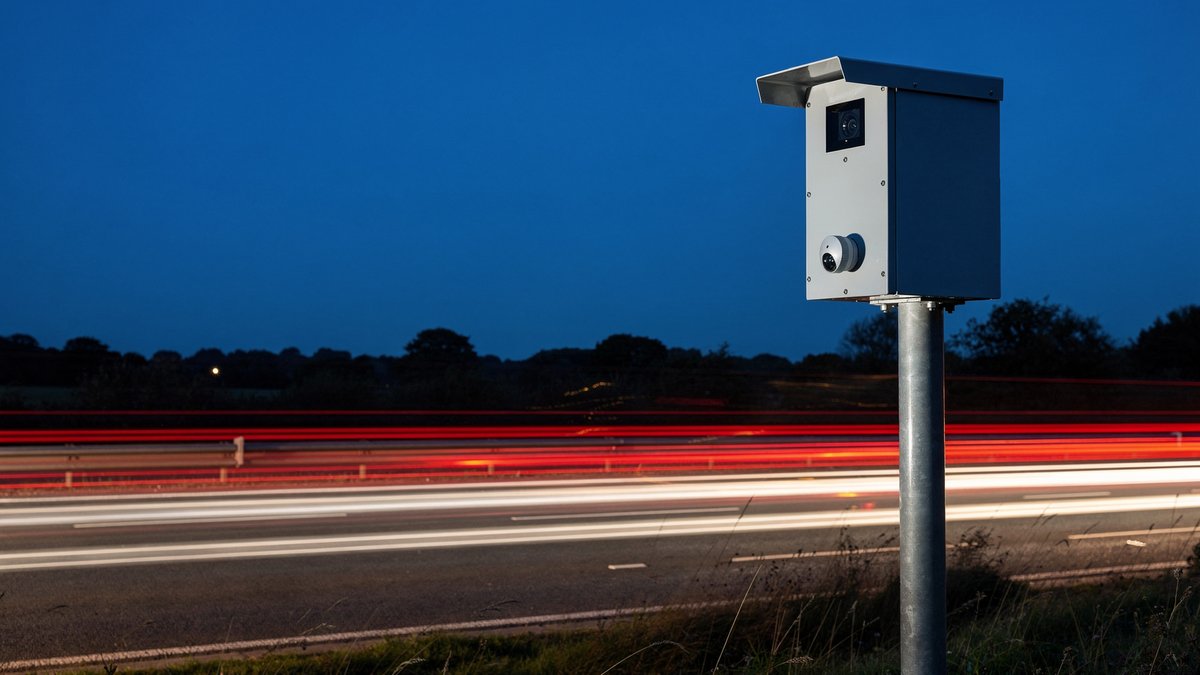
Ghost number plates have become a national enforcement priority. On 5 September 2026 the Department for Transport announced funding for a new National Roads Policing Coordination Centre to step up action on illegal number plates across England, with ghost plates named as a target.
If you make or sell plates, this matters to you twice over. Your customers will ask about it, and the DVLA and the DVSA are supporting investigations into businesses that supply illegal plates. This guide covers what ghost plates are, what the law already says, what is still under review, and how to keep your counter on the right side of it.
What ghost number plates are
The Department for Transport describes a ghost plate as one where a transparent film is used to make the registration undetectable to cameras. The target is automatic number plate recognition (ANPR), the cameras used to enforce speeding, parking and clean air zone penalties.
The government groups ghost plates with two other kinds of illegal plate:
- Cloned plates, which carry a registration copied from another legitimate vehicle
- Missing plates, where a vehicle has no plate at all
All three make a vehicle harder to identify. The government links them to drivers dodging fines and to organised crime, including moving illegal goods on the road network.
Are ghost number plates illegal?
Yes, and no new law is needed to make them so. The Road Vehicles (Display of Registration Marks) Regulations 2001 already say a plate must not be treated in any way that makes the characters less easy to read, or that would prevent or impair a true photographic image of the plate taken by a camera or any other device.
The same regulations ban reflex-reflecting material on the characters, and any fixing that changes how the characters look or how a camera records them. A film or coating applied to stop cameras reading a plate is exactly what those rules prohibit.
The consequences sit on both sides of the counter:
| Who | Offence | Maximum penalty |
|---|---|---|
| Driver | Driving with incorrectly displayed number plates | Fine of up to £1,000, and the vehicle will fail its MOT |
| Registered supplier | Supplying plates that do not conform to British standards | Fine of up to £2,500 and a ban from supplying number plates |
| Registered supplier | Not keeping records of the plates you supply | Fine of up to £1,000 and suspension from the register |
Every plate must be marked to show who supplied it. A plate that leaves your premises non-compliant can be traced straight back to you.
What the government announced in September 2026
The National Roads Policing Coordination Centre brings police forces from around England together to share intelligence and make better use of data on illegal plates. Its work includes trialling new technology, such as specialised goggles that can detect plates made unreadable to cameras.
The announcement also said the DVLA and the DVSA are working with the police on roadside operations, and supporting investigations into businesses involved in the illegal supply of number plates.
That last point is the one for a registered supplier to note. Enforcement is looking at where illegal plates come from, not only at the vehicles carrying them.
What is still under review
The September announcement builds on the government's Road Safety Strategy, published on 7 January 2026. In it, the government said it would:
- work with the DVLA, the DVSA, the police and industry to review the current standard for number plates
- empower the DVLA to carry out more robust checks on number plate suppliers
- research the full scale of the problem and explore using AI to identify illegal plates
- consult on tougher penalties for driving with illegal plates, including penalty points and ultimately vehicle seizure
The penalties consultation ran from 7 January to 11 May 2026. It asked whether penalty points and vehicle seizure should apply to being in charge of a vehicle with an incorrect, altered or false number plate. As of 21 October 2026, gov.uk showed the government was still analysing the responses.
Separately, BSI is working on an amendment to the standard, listed as BS AU 145e+A1. Its final wording has not been published. Until it is, BS AU 145e remains the current standard, and it is the one your plates must meet.
None of these changes is law yet. Each one points the same way, though: closer scrutiny of suppliers and the plates they sell.
Where this leaves 3D and 4D plates
Under the current rules, raised characters are legal. gov.uk says plates can have 3D raised characters, and that plates fitted after 1 September 2021 must be a single shade of black. For vehicles first registered on or after 1 September 2021, the MOT inspection manual adds that the entire surface of a raised character, including the sides, must be that single shade of black.
What makes a raised plate illegal is the same as for any plate: two-tone effects, clear or coloured sides, the wrong font or spacing, or a treatment that stops a camera reading it. The BS AU 145e supplier guide covers those rules in detail.
Because the standard is under review, avoid building deep stock of any product that relies on the current wording. Check for the published amendment before you reorder.
What to say at the counter
Most of your risk comes from customer requests, not from your own production. Make it house policy to refuse:
- any film, tint, spray or cover applied over a finished plate
- any product sold as a way to stop cameras reading a plate
- characters that are not a single shade of black, including raised characters with clear or coloured sides
- altered spacing, fonts or layouts
- any plate without the documents the law requires
Write the policy down and brief everyone who serves customers. A refusal that is written, consistent and explained is easier to hold than one left to whoever is on the counter that day.
The document check is the other half. A registered supplier must see original documents that prove the customer's name and address, and their entitlement to the registration, before supplying a plate. That check is what stops a cloned plate being made at your premises.
Keep records that stand up to an inspection
The DVLA requires you to keep a record of every plate you supply for three years. Each record must show the registration number, the customer's name, address and entitlement, and a number that can be used to trace the customer, taken from an original document such as a driving licence or V5C.
The police, the DVLA, the DVSA and Trading Standards can ask to see those records, and can enter a registered supplier's premises at any reasonable time without notice. With enforcement now looking at supply, keep your records ready to show on any working day.
If you supply plates or parts of plates to other suppliers, the DVLA expects you to satisfy yourself that they are registered and to record their registration number. The guide to RNPS record keeping sets out what a complete record looks like.
Ghost plates in the workshop and MOT bay
MOT testers already check for this. The MOT inspection manual says plates must not have any feature or fixing that changes the appearance or legibility of the characters, including tints or films. A plate that does not conform is a major defect.
The manual also tells testers to pay particular attention to screw positions and to delamination, because ANPR cameras see any non-reflective material as black. A screw head in the wrong place, or a peeling face, can make a legal plate misread.
When a vehicle comes in with a suspect plate, the fix is a new plate from a registered supplier, with the customer's documents checked and recorded. Peeling a film off the old plate leaves you guessing about the condition of the plate underneath.
Ghost number plates with Sandhurst Autoprint
Sandhurst Autoprint is a number plate supplier to the motor trade. We supply number plate components and ready made plates to plate makers, garages, dealers and motor factors across the UK. Our products are tested to BS AU 145e.
For the rules behind every plate you make, see our legislation and BS AU 145e guide. If you have a question about a product or a customer request, your Support Manager can help. New to Sandhurst Autoprint? Open a trade account.
Ghost plate checklist for suppliers
- Written refusal policy for films, tints, sprays and covers
- Every character a single shade of black, including the sides of raised characters
- Standard font, sizes and spacing on every plate
- Supplier mark and BS AU 145e mark on every plate
- Original ID and entitlement documents seen before every sale
- Records kept for three years and ready to show
- Registration numbers recorded for any supplier you sell plates or parts to
- Stock kept tight on any line that depends on the current standard
Frequently asked questions
What are ghost number plates?
The Department for Transport describes ghost plates as plates where a transparent film is used to make the registration undetectable to cameras. The aim is to stop number plate recognition cameras reading the vehicle.
Are ghost number plates illegal?
Yes. The regulations already ban treating a plate in any way that impairs a true image of it taken by a camera or other device. A driver can be fined up to £1,000 and the vehicle will fail its MOT.
What is the fine for supplying an illegal number plate?
A registered supplier who supplies plates that do not conform to British standards can be fined up to £2,500 and banned from supplying number plates.
Will ghost plates mean penalty points?
The government consulted on penalty points and vehicle seizure for being in charge of a vehicle with an incorrect, altered or false number plate. The consultation closed on 11 May 2026. As of 21 October 2026, no outcome had been published.
Are 3D and 4D number plates being banned?
Not under the current rules. Raised characters are legal if every surface is a single shade of black and the plate meets BS AU 145e. The government has said it will review the number plate standard, so check for changes before you stock up.
Can a car fail its MOT for a ghost plate?
Yes. The MOT inspection manual says a plate must not have any feature or fixing that changes the appearance or legibility of the characters, including tints or films. A plate that does not conform is a major defect.
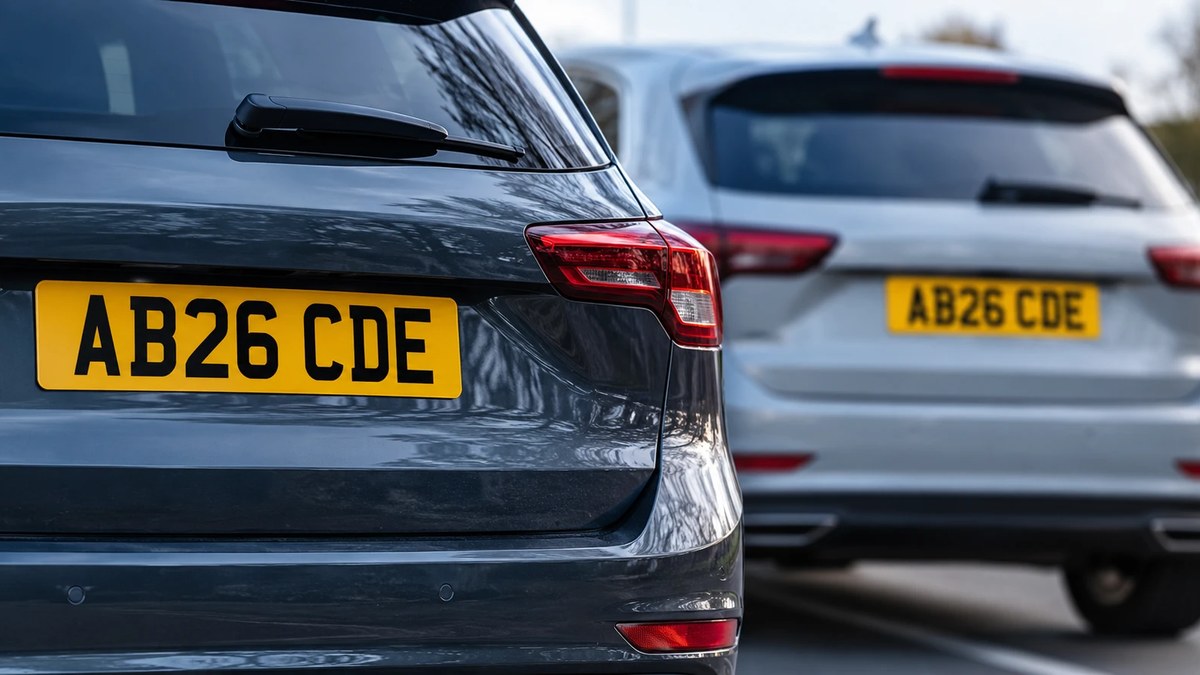
Cloned number plates: the DVLA's new online reporting service
The DVLA and police in England and Wales have launched a single online form for reporting cloned number plates. What it does, what it does not do, and what the crackdown means for plate suppliers.
Read article →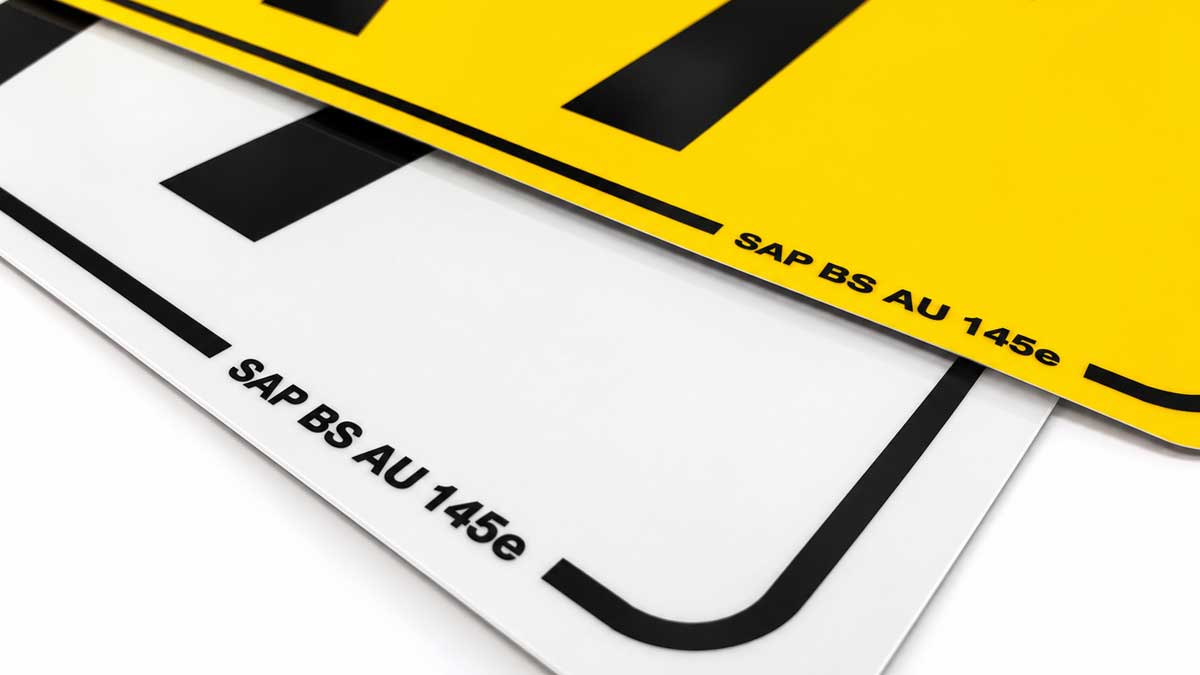
BS AU 145e: what a supplier is actually required to do
The standard changed in September 2021 and the obligations sit with the supplier, not the motorist. A plain English breakdown of solid black characters, flag placement, plate sizes and record keeping.
Read article →